
Detailed discussion on substations and the types of substations ...Author: Engr. Dibakar Dey, IIT-Kharagpur, India.
Detailed discussion about substations:

 A substation is a vital component of a power system. Substations play an indispensable role in the transmission and distribution of electrical power. In the present era, electrical power is generated, transmitted and distributed in the form of alternating current (AC). For various practical reasons related to power generation, power plants are typically located far away from the load centers. A substation is a facility comprising various pieces of equipment designed to distribute electricity at the required voltage to different locations. Substations are categorized based on factors such as usage requirements, the type of equipment employed and their physical location. This chapter discusses the functions of substations, the equipment they contain and the operation of that equipment.
A substation is a facility housing various essential equipment and devices, through which electricity is supplied by modifying certain characteristics of the electrical power. Situated between the power generation plant and the consumer, a substation serves as an intermediate station that primarily facilitates the alteration of AC voltage for the transmission and distribution of electrical power.
Through substations, electricity is transmitted and distributed by converting low voltage to high voltage and vice versa as required.
The continuity of the power supply system depends on the location of the substation, the reliability of the equipment used, and its overall operation.

The single-line diagram of an 11/0.4 kV substation is shown below.
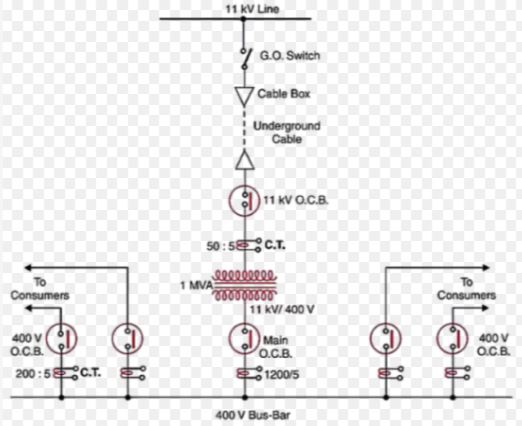
Function of a Substation: For various practical reasons, electric power generation plants are often located far away from the load centers—one such reason being the availability of fuel. The primary function of a substation is to supply electricity at the required voltage to various locations while minimizing power loss within the system. A substation is a crucial component of a power system. The primary function of a substation is to increase the voltage generated at a power plant for transmission over long distances and subsequently, when needed to convert that high voltage into a level suitable for end-use. Various pieces of equipment or switchgear are installed to facilitate this process. A key electrical component used for this purpose is the transformer.
Substations are used for the control, regulation, transformation and distribution of electrical power. Additionally, protective equipment such as surge absorbers and lightning arresters is employed to ensure the safe operation and maintenance of the electrical system.
Substation Equipment: The equipment used for the effective control, repair, maintenance, and regulation of an electrical system includes the following notable items:
1. Busbar
2. Circuit breaker
3. Lightning arrester
4. Isolator
5. Transformer
6. Instrument transformer
7. Insulator
8. Control panel
9. Earthing system
10. Fire extinguishing equipment
11. Surge absorber
12. Cables etc.
Operation of Substation Equipment: Equipment used for the efficient control, regulation, repair and maintenance of electricity supply must be operated correctly; failure to do so can lead to major disruptions in power supply and even result in loss of life. Understanding the operational procedures for this equipment and strictly adhering to them can significantly reduce the risk of fatal accidents.
The operation of the equipment used in a substation is briefly described below:
1. Busbar: This consists of several thick copper or aluminum strips that are securely fastened together using nuts and bolts. The busbar collects and distributes electrical power or energy from the circuit.
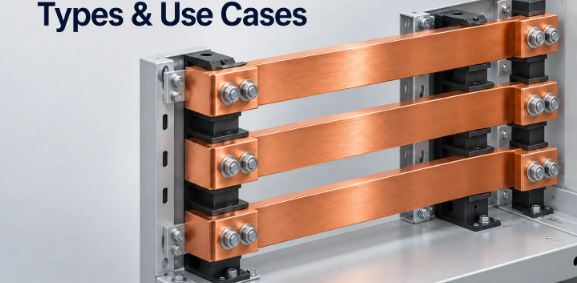
Working principal of busbar at sub-station:
- Power Reception and Connection: High-voltage electrical power enters the substation via transformers or incoming transmission lines and is connected directly to rigid or flexible metal busbars.
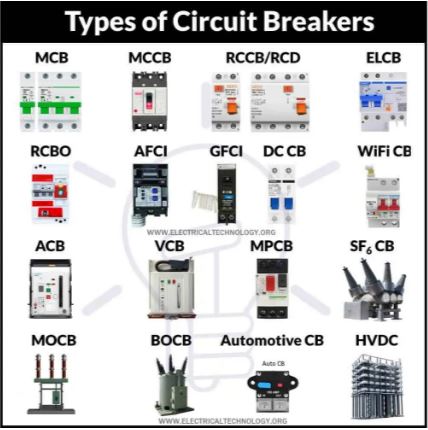
2. Circuit Breaker: When an excessive amount of current flows through a faulty circuit, the circuit breaker triggered by a relay automatically disconnects the circuit from the power supply. It can also be operated manually.
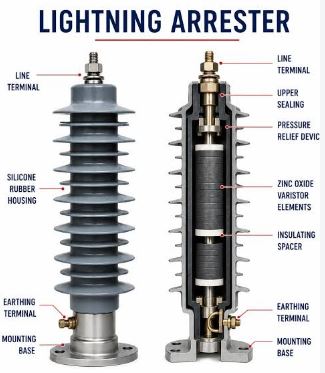
3. Lightning Arrester: A lightning arrester is a device used to protect electrical lines, equipment and other apparatus from the high voltage generated in a line due to a lightning strike. It operates automatically. It is a highly significant protective device within a substation.
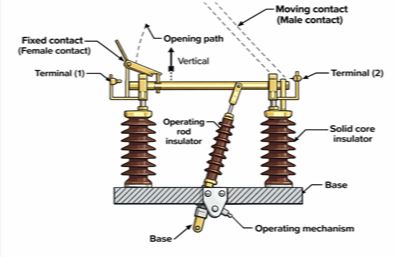
4. Isolator: This is a mechanical switching device that is operated (turned on or off) only when there is no load. An isolator should be operated only after the circuit breaker connected to the line has been operated; in other words, it must be operated under a no-load condition. Isolators are of great importance for ensuring safety when performing work on electrical lines.
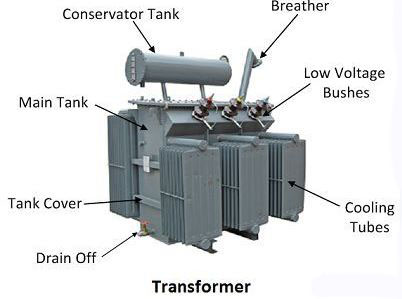
5. Transformer: This is a key device or electrical machine used in a substation. It facilitates the primary function of the substation; specifically, it is responsible for increasing or decreasing the system voltage. Other equipment within the substation is employed primarily to ensure the proper operation of the transformer. Routine maintenance of this component should be carried out with great care and diligence.
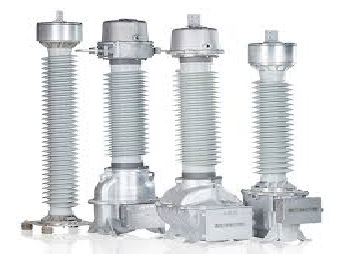
6. Instrument Transformer: Instrument transformers are used to measure high voltages and currents using low range meters, as well as to facilitate the operation of control devices. Current transformers (CTs) are used for measuring current, while potential transformers (PTs) are used for measuring voltage.
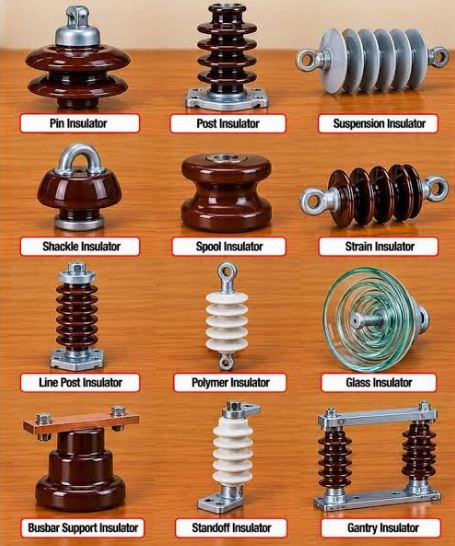
7. Insulator: An insulator is a component typically made of porcelain used to ensure the proper connection of switchgear, busbars and transformers within a substation.
8. Control Panel: A control panel consists of a panel board, meters and relays designed for the automatic operation of the system. The entire system is controlled from this control panel.
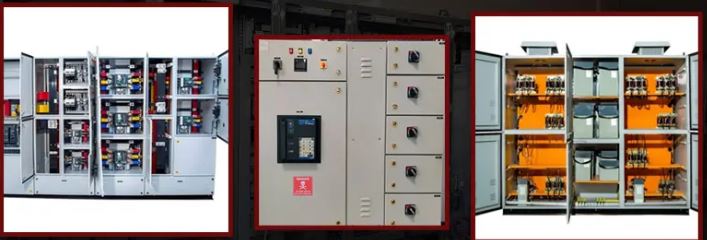
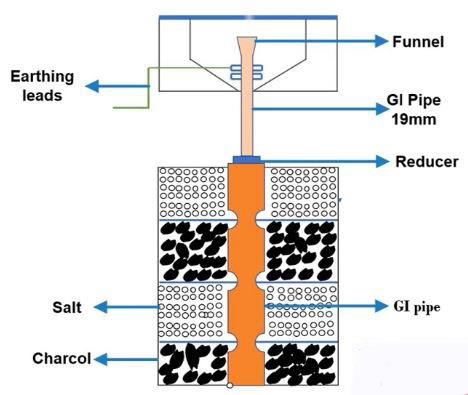
9. Earthing System: Equipment such as transformers, switchgear, and busbars used in a substation are grounded (earthed) in accordance with established standards. This is crucial for safety.
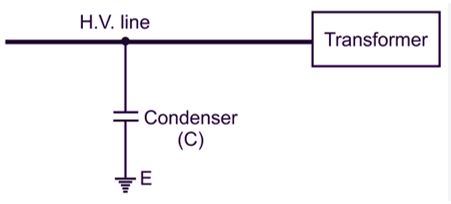
10. Surge Absorber: This device functions to safely divert (ground) the effects of surge voltages.
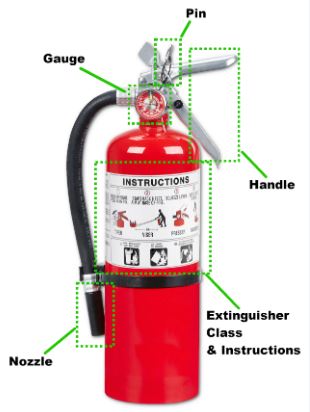
11. Fire Extinguisher: Fire extinguishers are provided to prevent accidents in the event of a fire, such as one caused by an electrical short circuit.
Question: What are the different types of substations?
Answer: Generally, substations can be classified into two categories:
-
Based on voltage type
-
Based on the nature of use
Based on voltage type, substations can be divided into two categories:
-
Step-up substation

-
Step-down substation

Based on their function, substations can be classified into four types:
-
Switching substation

-
Converting Substation

-
Power Factor Correction Substation

-
Industrial Substation

Based on their installation location, substations can be classified into three types:
-
Indoor substation

-
Outdoor Substation


-
Pole-mounted substation

A diagram showing how to make star and delta connections?
