
On Types of Transformers and Their Characteristics - - - Author: Engr. Dibakar Dey, IIT-Kharagpur, India.
Transformers are essential at every stage: generation, transmission and distribution.
Type of Transformer:
- According to Construction
- According to Core Medium
- According to Voltage Level
- According to type of supply
- According to their use
- According to Instrument Transformer
- According to the place of use.
1. According to Construction
- Core type transformer --> 1-Ø, 3-Ø
- Sell type transformer --> 1-Ø, 3-Ø
2. According to Core Medium
- Air Core transformer --> use Radio frequency
- Iron Core transformer
- Ferrite Core transformer
3. According to Voltage Level
- Step up transformer --> Use Power Generation
- Step down transformer --> Use Power Distribution
4. According to type of supply
- Single phase Transformer
- Three phase Transformer
5. According to their use
- Power Transformer --> Generation Transformer
- Distribution Transformer --> Subscriber Transformer
- Instrument Transformer --> Use Substation
6. According to Instrument Transformer
- Current Transformer(CT)
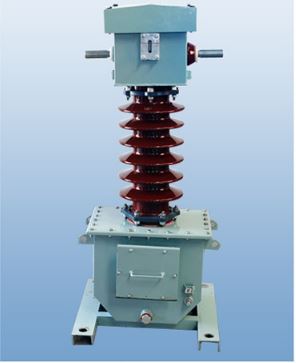

- Potential Transformer (PT)
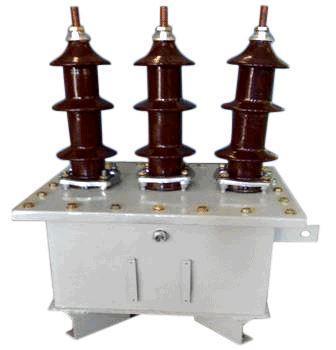
7. According to the place of use.
- Indoor Transformer
- Outdoor Transformer
- Pole mounted Transformer
Characteristics of a Transformer:
-
The frequency of the voltage generated in both coils always remains the same.
-
The two coils transfer electrical power without any direct electrical connection.
-
The voltage and current levels in the coils depend on the number of turns and the size of the coils.
-
The KVA power in both coils always remains the same.
-
A transformer is a static device. It operates based on Faraday's principle of electromagnetic induction.
What is Transformer Ratio?
Transformer Ratio: a = n1/n2 = v1/v2 =I2/I1
Where a = Trans ratio of Transformer
n1 = Number of turns on Primary Coil
n2 = Number of turns on Secondary Coil
v1 = Primary Voltage
v2 = Secondary Voltage
I1 = Primary Current
I2 = Secondary Current
Øm = Magnetic Flax
1. What is a transformer?
A transformer is a static electrical device that transfers power from one circuit to another—without any direct electrical connection—by means of magnetic coupling between two coils. It allows for the voltage to be increased or decreased as needed, all while keeping the power and frequency unchanged.
Transformers are of three types:
1. Core type
2. Shell type
3. Spiral core type
Based on their operating principle, transformers are classified into three categories:
1. Step-up transformer
2. Step-down transformer
3. One-to-one transformer
Based on their application, transformers are classified into four categories:
1. Power transformer
2. Distribution transformer
3. Autotransformer
4. Instrument transformer
Instrument transformers are of two types:
1. Current transformer
2. Potential Transformer
Based on the installation method, transformers are classified into three types:
1. Indoor-type transformer
2. Outdoor-type transformer
3. Pole-mounted transformer
Based on frequency, there are two types:
1. Audio-frequency transformer
2. Radio-frequency transformer
2. What type of device is a transformer?
Answer: A transformer is a static electrical device.
3. Where is the Buchholz relay located?
Answer: It is installed in the pipe connecting the transformer tank and the conservator.
4. What is meant by 'transformation ratio'?
Answer: The transformation ratio refers to the specific ratio that the voltages and currents on the primary and secondary sides of a transformer maintain in relation to the number of turns in the windings.
5. Transformer losses are of two types:
-
Core loss
-
Copper loss
6. Core losses are of two types:
-
Eddy current loss
-
Hysteresis loss
7. The various connection methods for three-phase transformers are:
-
Star-Star
-
Delta-Delta
-
Delta-Star
-
Star-Delta
